
Wine guide
Şirince wine: the village’s grape and fruit traditions
For many visitors, Şirince brings fruit wine to mind first. Yet the village’s story begins with vineyards. This guide explores both traditions.
By Şirince Wine · Last updated: 4 October 2026
What is Şirince wine?
“Şirince wine” is not an official classification. It is a general term for grape and fruit wines made in or around the village, or sold there. Products from different producers sit side by side; despite sharing a name, their styles, ingredients and production locations vary.
Wine culture in Şirince
The Küçük Menderes basin, where Şirince lies, has been known for viticulture since antiquity. The village’s proximity to Ephesus also explains references to Dionysus, Zeus and Artemis in product names today. The Greek community living here until the 1923 population exchange maintained vineyards and winemaking traditions. With the arrival of new families during the exchange, fruit growing and fruit wine production became more prominent.
Today, the village’s wine culture lives on mainly through small cellars, shops and tasting counters. For visitors, wine forms part of the Şirince experience alongside its streets, olive oil, soap and handicrafts.
Grapes and fruits used
Grape varieties
- Bornova Misket: A local white grape from İzmir with floral aromas.
- Sultaniye: The most widely grown seedless white grape in the Aegean region.
- Çalkarası: A red grape from Denizli, often used for rosé.
- Öküzgözü: An indigenous Anatolian red grape with large berries.
- Chardonnay, Merlot, Cabernet: International varieties also grown in the region.
Fruits
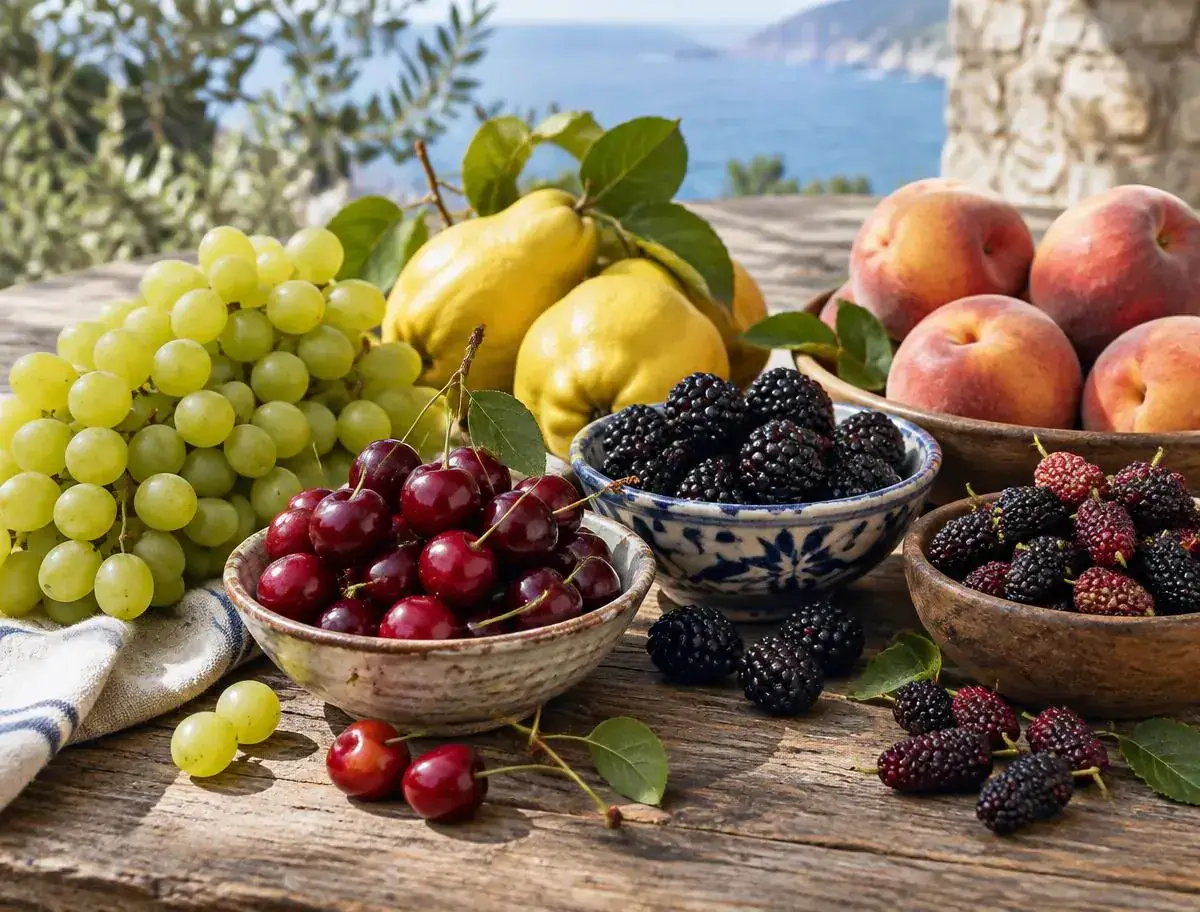
Sour cherry, blackberry, strawberry, black mulberry, peach, melon, damson and quince are among the fruits most often found in the village’s fruit wines. Some products blend several fruits or include flavourings such as cinnamon or honey.
How fruit-based and grape-based wines differ
- Ingredients: Grape wine uses grapes alone; fruit wine uses other fruits.
- Alcohol content: Often 6–9% for fruit wines and generally 11–15% for grape wines.
- Sugar: Fruit wines are usually sweet or off-dry; grape wines come in dry, off-dry and sweet styles.
- Label information: For both types, the label states the producer, production location, volume and alcohol content.
Wine styles
The wines found in the village fall broadly into five groups: white, red and rosé grape wines; fruit wines; and blends such as sangria or spiced wine. Find examples and their details in the Şirince wines catalogue. For more on the village’s cellar traditions, read our Şirince wine cellars guide.
Frequently asked questions
What is Şirince wine?+
It is a general name for grape and fruit wines associated with Şirince village and its surroundings. It is not a single product or a category with geographical indication status; the village offers different styles from different producers.
Is every wine sold in Şirince made in the village?+
No. Some products bearing the Şirince name are made in other regions. The production location is stated on the label, so checking it is the most reliable way to find out.
How does fruit wine differ from grape wine?+
Grape wine is made by fermenting grapes alone, while fruit wine uses other fruits or fruit added to grapes. Fruit wines often have a lower alcohol content.
What do dry, off-dry and sweet mean?+
These terms describe the amount of natural sugar remaining in the wine. Dry wine has no perceptible sweetness, off-dry wine has a little, and sweet wine is noticeably sweet.
Sources and external links
- sirincesarabi.com
Product records and technical details of Şirince wines (Turkish).
- sirincesarapcilik.com
Producer site of Şirince Şarapçılık: vineyards, cellar and winemaking.
- kapadokyasarapcilik.com
Producer site of Kapadokya Şarapçılık: viticulture and winemaking in Cappadocia.
- 0alkol.com
Information on non-alcoholic wine and grape products.
- sirincego.com
Travel and local information about Şirince village.
Keep reading